
Why Does God Allow Suffering? The Short Answer
Why does God allow suffering? The Bible’s answer begins in Genesis 1–3: suffering entered the world through deception, not through God’s design. God created a perfect world, the devil deceived Adam and Eve into breaking the one instruction they had, and that opened the door to death, sickness and pain. Scripture also tells us how the story ends: Revelation 21:4 promises a world with no more death, sorrow, crying or pain.
So why did God allow it, and why did He let the devil deceive Adam and Eve? I believe He allowed the devil on the earth so that His works would be made manifest. All of creation reveals who God is, including His justice. Suffering is the consequence of disobedience, and God held man to the same standard He held the devil and the angels who rebelled. Had He waived the consequence for us simply because He loves us, He would have been partial, and we could get away with anything.
Instead, God showed His love by suffering with us and in our place. He came as Jesus Christ, became acquainted with our grief (Isaiah 53:3), and died the death our disobedience deserved. Everyone who believes in His sacrifice has their sin paid in full and is free to live unto God.
It isn’t an easy answer, and I’ve wrestled with it myself after losing both of my parents young. Below, I walk through how we got here and what Scripture says in response.
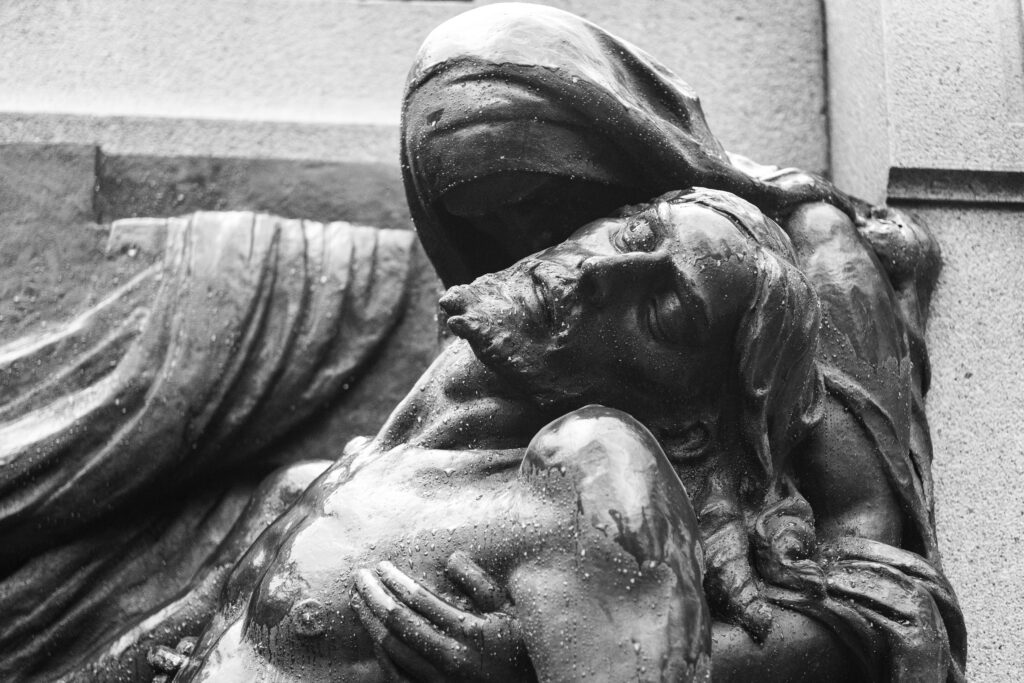
How Suffering Began: Genesis 1–3 in Brief
God created a good world, an enemy was already present on the earth, and the fall opened the door to death.
Genesis 1 tells us that God created the heavens and the earth, and then remade the earth for mankind. Verse 2 says the earth was “without form, and void,” and many Bible teachers hold that something happened between verses 1 and 2: Lucifer rebelled and was cast down to the earth along with the angels who followed him (Revelation 12:7-9). That is one common view, and nothing else in this post depends on you agreeing with it. What matters is that Scripture is clear the devil was active on the earth before we arrived.
Even so, God said “Let there be light,” remade the earth, and created man in His own image with dominion over it (Genesis 1:26). In Genesis 2, He placed Adam and Eve in the Garden of Eden, a perfect garden with no sickness and no death. They were free to eat from every tree, including the tree of life, with one exception:
“And the LORD God took the man, and put him into the garden of Eden to dress it and to keep it. And the LORD God commanded the man, saying, Of every tree of the garden thou mayest freely eat: But of the tree of the knowledge of good and evil, thou shalt not eat of it: for in the day that thou eatest thereof thou shalt surely die.” (Genesis 2:15-17)
In Genesis 3, the serpent came to Eve and did what the devil does best: he deceived. He told her she would not die, which was calling God a liar, and promised she would be like God, even though Genesis 1 had already said we were made in His image. Eve ate and gave the fruit to Adam, and death entered the world.
That is the door through which death, sickness, pain and every heartbreak we see today came in. Jesus said as much when He told us that in this world we will have trouble (John 16:33). So it’s natural to ask: why did God give that instruction in the first place?
Why Did God Give Adam and Eve the Instruction About the Tree?
I believe the instruction was a training ground for discernment, not a trap.
As a young Christian, I asked this question often. God, You knew Adam and Eve would fail. The devil would come and tempt them. Why give the instruction at all? I believe the Bible encourages us to ask these questions, because they are exactly what the enemy uses to kill our faith when something painful happens and we have no answer. If someone asks why you believe in a God who allowed all this, you should have something to say.
The Holy Spirit helped me see something. When we are children, it takes time to learn the difference between good and evil. God had already created Adam and Eve in His image, but discernment is something that develops as we grow. Look at what Hebrews says:
“But strong meat belongeth to them that are of full age, even those who by reason of use have their senses exercised to discern both good and evil.” (Hebrews 5:14)
The phrase “by reason of use” is key. Discernment is not something God simply hands over. It develops as we repeatedly choose between good and evil and see the consequences of each. Isaiah 7:15-16 points in the same direction, showing that a child does not naturally arrive with the ability to tell good from evil. We see this with our own children today. Nobody is born with it. It comes with maturity and with constant exercise.
Remember that Adam and Eve had only just been formed. In Genesis 1, God created man in His image, setting out the ideal of what they would look like and become. In Genesis 2, He began the actual process of forming them, and I believe that process included training in discernment. They were free to eat from every other tree, so there was nothing they couldn’t do. That made the one instruction God gave the very thing that would help them develop discernment.
This is my own understanding, not a doctrine I’m claiming, but I picture Adam and Eve walking past that tree every single day and remembering that God had told them not to eat from it. Each day they passed it, they were exercising their senses: obeying God is good, and disobeying Him is evil. The instruction wasn’t useless, because God does not do useless things. It was part of a process.
God is not looking for reasons to punish people, and He was not trying to withhold knowledge from Adam and Eve. He was training them.
The Holy Spirit does the same work in us today. Discernment still doesn’t come naturally. It’s why Paul wrote that the things he wanted to do, he did not do, and the things he did not want to do, he found himself doing. The Holy Spirit reminds us, “This thing you’re about to do is wrong,” and gives us the capacity to live a life worthy of what Christ has called us to.
Is God Good If There Is Suffering? The Christian Answer
Yes. God is good, and the proof is in how the story begins and how it ends.
Loss of a loved one is one of the most painful things any of us face, and it can shake our faith. We find ourselves asking where God was, what He was doing, and why we are suffering. Those questions make us ask how we even got here. We got here because something happened: a door was opened through man’s mistake, the devil tempted, and we fell.
The question also comes from outside the church. I once read an article about Christianity on the BBC website that described what it called the contradiction of the Christian faith, often called the problem of suffering: we say God is all-powerful and all-knowing, and yet there is suffering in the world. How can a good God allow it? Either He isn’t good, or He isn’t powerful enough to stop it.
This is why we study the Word of God, so that we have answers for ourselves, and so that when the devil comes to deceive us, we know who we believe in.
Here is how I answer it. When God created the heavens and the earth, and when He placed Adam and Eve in Eden, it was a perfect system. There was no sickness and no death, everything was good. To show just how perfect things were, even after the fall, people lived hundreds of years, nine hundred and more, which sounds impossible today. As the years went on, the more death completely took over.
But look at where we are headed:
“And God shall wipe away all tears from their eyes; and there shall be no more death, neither sorrow, nor crying, neither shall there be any more pain: for the former things are passed away.” (Revelation 21:4)
From the beginning it was good. At the end it will be good again. The middle, our time here on earth, is where we deal with the effects of death, sickness and pain, and where the devil has had a field day. But God has not left us without a solution. He sent Jesus Christ to deliver us. Jesus went about preaching the good news, healing the brokenhearted and healing the sick, and His sacrifice on the cross is, first of all, God’s answer to death. Because He died and rose again, death is no longer the end for those who believe. It is a transition into life with Him forever (John 11:25-26).
So God was good in the beginning, He is still good today despite the struggle and the suffering, and He will be good at the end of the age. While we are here, He has promised to comfort and strengthen those who trust in Him (2 Corinthians 1:3-4)
Why God Couldn’t Simply Cancel the Consequence
If God loves us this much, why couldn’t He just remove the consequence of Adam and Eve’s disobedience? I believe the answer lies in who God is. The Bible says His nature can be seen in everything He has made:
“For the invisible things of him from the creation of the world are clearly seen, being understood by the things that are made, even his eternal power and Godhead; so that they are without excuse.” (Romans 1:20)
Creation reveals a God who is both loving and just, and the two never contradict each other. “Justice and judgment are the habitation of thy throne: mercy and truth shall go before thy face” (Psalm 89:14). God had warned Adam and Eve plainly that disobedience would bring death. If He had waived that consequence simply because He loves us, love would mean that no one is ever held accountable, and we could get away with anything.
It would also have been unfair to the devil and the angels who rebelled. Scripture says God did not spare the angels who sinned (2 Peter 2:4). If they faced the consequence of their actions, so could man, because “there is no respect of persons with God” (Romans 2:11). That impartiality is part of what makes God trustworthy. A God who plays favorites could not be fully good.
God Suffered With Us, and in Our Place
But God didn’t stop at justice. Instead of removing the consequence, He took it on Himself. He came as a man, Jesus Christ, and went through the very things we go through as humans: hunger, grief, rejection, pain and death.
“For we have not an high priest which cannot be touched with the feeling of our infirmities; but was in all points tempted like as we are, yet without sin.” (Hebrews 4:15)
Isaiah described Him centuries earlier as a man of sorrows, acquainted with grief:
“Surely he hath borne our griefs, and carried our sorrows: yet we did esteem him stricken, smitten of God, and afflicted. But he was wounded for our transgressions, he was bruised for our iniquities: the chastisement of our peace was upon him; and with his stripes we are healed.” (Isaiah 53:4-5)
The price of disobedience was death (Romans 6:23), so Jesus died on the cross in our place. He took the consequence of what we did, even though He had warned us not to do it. That is how God stays both just and loving, and Paul says so directly: God did this “that he might be just, and the justifier of him which believeth in Jesus” (Romans 3:26).
Everyone who believes in Jesus’ sacrifice presents it before God as payment in full for their sin and disobedience. The consequence has been paid, and we are free to live unto God.
Why Didn’t God Destroy the Devil Before Creating Us?
I believe God allowed the devil to remain so that His works, and our faith, would be made manifest.
It’s a fair question. If the devil is the one who brought suffering and death, why didn’t God remove him before creating Adam and Eve? I don’t claim to have the complete answer, but here is what I believe.
In John 9, Jesus meets a man born blind, and the disciples ask who sinned, the man or his parents. Jesus answers that neither did, but that the works of God should be made manifest in him. I believe God works the same way here. He allowed the devil to remain, and He created us in the midst of that darkness. It’s as though God was saying: regardless of the devil and the darkness on the earth, I will still bring light out of darkness. Scripture shows us that God uses everything, even a Pharaoh, to display His glory.
The devil’s greatest tool is suffering, death and pain. It’s what he uses to convince people that God is not good, which is exactly what we hear from the world today. But I believe God was saying, in effect: devil, do your worst. I will still have a people who love Me and honor Me regardless of the suffering. It reminds me of Jesus’ parable of the wheat and the tares, where both grow together until the end.
A few other thoughts help me here:
- God had always planned to destroy the devil. Ezekiel’s prophecy about the fire that comes from within him points to it. The question is why He allowed the delay, and I believe it was to display His works.
- Removing the devil wouldn’t guarantee no rebellion. The devil rebelled even when everything was perfect. We can’t say man would never have rebelled on his own.
- Our suffering is not endless. God sent Jesus to die for our sins, to redeem us and save us from sin and death. Jesus has already solved death for us. We simply have to believe in Him.
When I say God allowed the devil so that His works would be made manifest, this is what I mean. All of creation reveals who God is, and I believe the devil’s rebellion is no exception. Set against that darkness, God’s justice, patience and love stand out. Scripture says something similar of Pharaoh: God raised him up so that His power would be shown and His name declared throughout the earth (Romans 9:17). Even the worst the enemy does ends up displaying what God is like: He holds everyone accountable, and He still makes a way for us to be saved.
None of this makes the pain easy. I’ve been through it myself. I lost both of my parents at a young age. I gave my life to Christ in March, and that same year my mom died. I remember thinking, I just came to You, and the first thing You do is take away my only parent. That is where these questions come from for me. I went through that struggle of faith.
But Peter tells us what the struggle produces:
“That the trial of your faith, being much more precious than of gold that perisheth, though it be tried with fire, might be found unto praise and honour and glory at the appearing of Jesus Christ.” (1 Peter 1:7)
When you go through suffering, come out the other side, and still stand and say, “God is good, and He loves me,” even without fully understanding it, that faith is precious. I don’t understand it completely myself, but I believe it. It is also why the Bible tells us to take up the shield of faith and the sword of the Word of God. Our faith is precious because it’s exactly what the enemy is out to attack.
God isn’t happy about our pain. But He allowed it so that our faith would be established in Him, and found to His glory.
Nothing Can Separate Us From the Love of Christ (Romans 8:35-39)
The devil’s job is to separate us from God, and he does it through deception, so we hold on to what Scripture says is true.
“Who shall separate us from the love of Christ? shall tribulation, or distress, or persecution, or famine, or nakedness, or peril, or sword? As it is written, For thy sake we are killed all the day long; we are accounted as sheep for the slaughter. Nay, in all these things we are more than conquerors through him that loved us.” (Romans 8:35-37)
Paul names tribulation, distress, persecution, famine, peril and sword, and asks whether any of them can separate us from Christ’s love. The devil’s aim is to use our suffering and pain to deceive us away from God. We have a hope that is not forever tied to this life. Paul says elsewhere that our “light affliction” works for us “a far more exceeding and eternal weight of glory” (2 Corinthians 4:17). Our whole lifetime of pain, put together, is not comparable to the glory we will see in heaven: no more suffering, no more sadness, no more hurting.
This is also why I believe God trains us to discern good from evil now. By the time we get to heaven, what happened to Lucifer will not happen to us. Nothing that defiles will enter in, because God will once and for all destroy the devil and everything that causes sin, pain and sorrow.
One idea that has stayed with me is that our time on earth is, in a sense, preparation for heaven. In the meantime, we will see tribulation. We will lose loved ones. We will pray, and some will be healed while others may not. That is part of living in a fallen world, and these three chapters of Genesis show us how it came to be, and why God allowed it. It also means that the most important work we can do is to help people get saved and come to know the Lord. Suffering that ends in a godless eternity would be a tragedy. We want everyone to see the life God designed, where there are no more tears.
God is in the pain with you
I know that we are all going through things. God knows I am, and God knows you are. We may not know what each of us is carrying, but I want you to know that God is in that pain with you. We do not have a High Priest who is unaware of our infirmities. Jesus knows exactly the kind of pain we’re going through, and He says, “I am in there with you. I’ve won it for you.”
“And they overcame him by the blood of the Lamb, and by the word of their testimony; and they loved not their lives unto the death.” (Revelation 12:11)
That last phrase, “they loved not their lives unto the death,” didn’t make sense to me at first. Here is how I understand it now: don’t let death, pain or suffering separate you from the love of God in Christ Jesus. When we talk to others about Jesus, let’s remind them that, despite the suffering, God loves us and has thoughts of good toward us and not of evil, to bring us to an expected end with Him. And let’s remember that our faith, tried through this life, is much more precious than gold and will be found to the praise and glory of God.
Frequently Asked Questions About Suffering
Why does God allow suffering?
Suffering entered the world through deception and the fall, not through God’s design. I believe God allowed the devil to remain so that His works would be made manifest and so that He would have a people who love Him by faith, despite the pain. Jesus has already won the victory over death for us, and Revelation 21:4 shows us where the story ends.
Did God create suffering?
No. When God created the heavens and the earth, and placed Adam and Eve in Eden, it was a perfect system with no sickness and no death. Suffering came in through the devil’s deception and our own choice.
Why couldn’t God just remove the consequence of sin?
God had warned that disobedience would bring death, and He holds everyone to the same standard, including the devil and the angels who rebelled. Waiving the consequence for us would have made Him partial. Instead, Jesus took the consequence in our place, so that God could be just and still justify everyone who believes (Romans 3:26).
Why did God put the tree of the knowledge of good and evil in the garden?
I believe it was a training ground for discernment, not a trap. Hebrews 5:14 tells us discernment develops “by reason of use,” through repeatedly choosing good over evil. Each day Adam and Eve passed that tree and chose to obey, they were exercising that discernment.
Where is God when I’m in pain?
He is in it with you. We do not have a High Priest who is unaware of our infirmities (Hebrews 4:15). Jesus knows the pain we go through, and nothing, not tribulation, distress or death, can separate us from His love (Romans 8:35-39).
Related reading: Understanding God’s Unfailing Love in Psalm 107, why do we pray if God knows everything already and our foundational teachings on the doctrines of the Christian faith.
A Prayer for Those Who Are Hurting
If you’re carrying pain today, I’d like to pray with you.
Father, thank you for your Word today. We ask that the Holy Spirit would quicken it in our understanding and in our lives, and meet us at the point of our need. Lord, for everyone who is going through pain, we thank You that by Your stripes we are healed. We pray against sickness in our churches, in our families, and wherever we find ourselves, and we pray for healing in the name of Jesus. Let the healing Jesus Christ procured for us be made manifest today, right now.
Support us, help us, and comfort us as we go through life. Remind us that You are a good God, that You have us, and that You are taking care of us. Let whatever suffering we face not take us away from You, but work for us an eternal weight of glory. Wherever we are in pain, comfort us. Heal every broken heart. Carry us as You always do, even to the end of this year. For in Jesus’ precious name we have prayed. Amen.
Thank you for sticking with me to the end! If this is your first time visiting our blog, welcome! Take some time to explore the site and join our community to receive new blog posts and updates.
If you have any questions or comments, feel free to reach out through the contact page. And don’t forget to read, share, and leave a comment below!
Enjoyed this? Subscribe for more posts like this, straight to your inbox!

This is a very great article and an eye opener of whom God is and how he operates…
Great writer and more anointing in Jesus name 🙏
Thank you for your heart warming comment. Am glad it blessed your heart!